The Best Online Learning Platforms Every Teacher Should Know
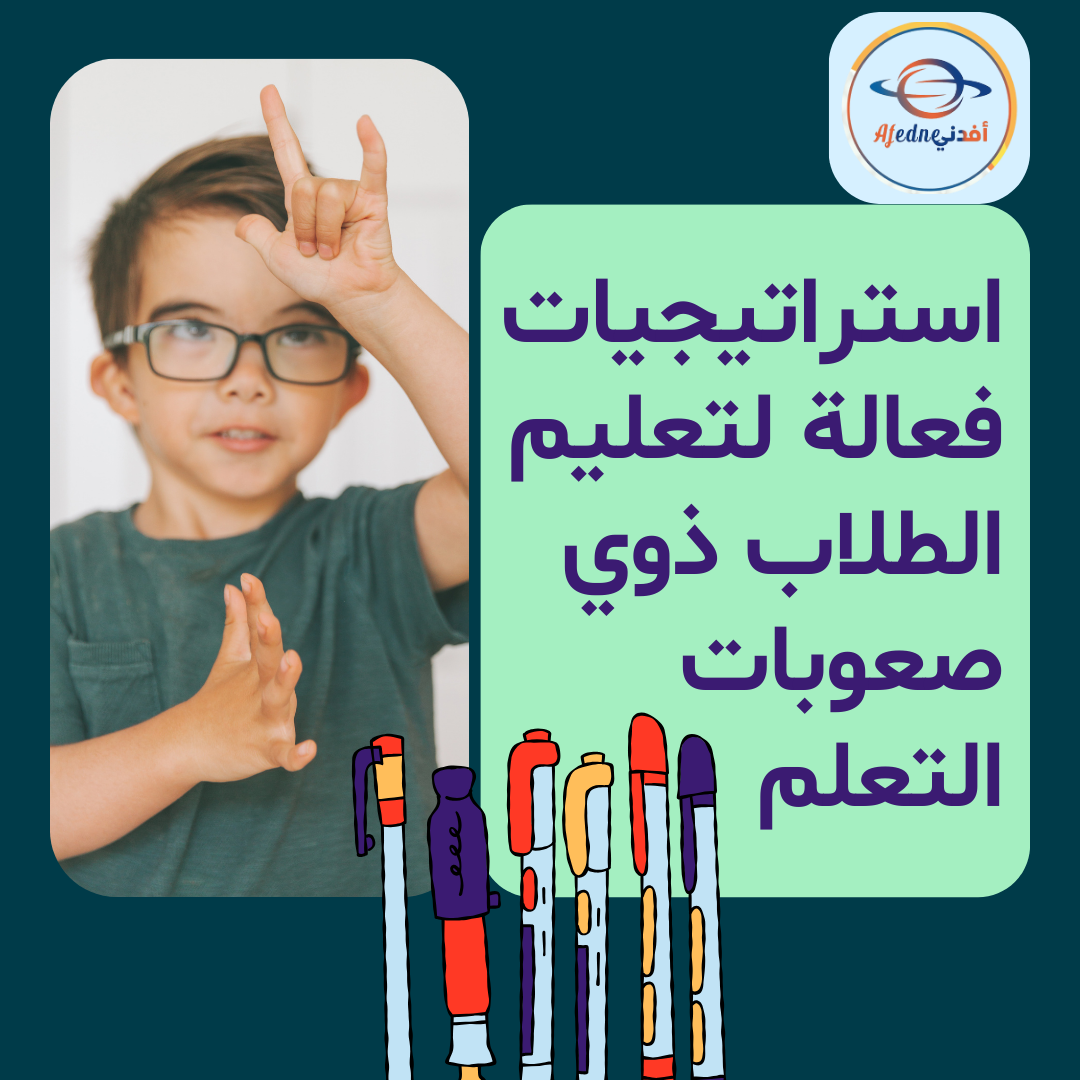
Methods for Teaching Students with Learning Disabilities
Students with learning disabilities represent a significant segment of the school community. However, learning disabilities do not reflect intelligence levels, but rather a gap between children's actual abilities and the academic performance expected of them. Therefore, there is a need to adopt innovative teaching strategies that meet the needs of this group and enable them to reach their full potential.
Early Diagnosis:
Early detection of learning disabilities is the first step towards effective teaching. Teachers can use various assessment tools such as:
Behavioral Rating Scales
Diagnostic Educational Tests
Daily Performance Observations
Analysis of Learning Error Patterns
Effective Teaching Strategies:
1. Individualized Analysis and Assessment
Why is this important?
Understanding the reasons for each student's learning disabilities helps in designing an educational plan that suits their needs.
How to implement it?
Assess the student's abilities. Use tools such as diagnostic tests or psychological assessments.
Talk to parents and specialists to gain a comprehensive understanding of the student's situation.
2. Using Individualized Instruction
Why is this important?
Individualized instruction gives the student the opportunity to learn at their own pace and in a way that suits their needs.
How to implement it?
Tailor learning materials to suit the student, whether by reducing complexity or breaking down content into smaller chunks.
Use a variety of teaching methods, such as simplified explanations or practical exercises.
3. Use Assistive Devices and Technology
Why is this important?
Technology provides useful tools to support students with learning difficulties.
How to implement this?
Use educational apps and programs such as:
Text-to-Speech to convert text to speech
Speech-to-Text to convert speech to text
Educational games for teaching math and reading in a fun way
Use tablets and interactive whiteboards to make learning content more engaging.
4. Multisensory Learning
Why is this important?
Using more than one sense in the learning process helps students understand information better.
How to implement this?
Integrate visual, auditory, and kinesthetic senses into learning activities.
Use hands-on tools such as 3D models, pictures, and physical games.
5. Boost Self-Confidence
Why is this important?
Students with learning difficulties may become easily discouraged, which can negatively impact their performance. Positive reinforcement motivates them and boosts their self-confidence.
How to implement it?
Praise the student for their effort, not just the results.
Use a simple reward system to incentivize good performance.
Focus on their small achievements and celebrate them.
6. Foster collaboration between teacher and parents
Why is this important?
Collaboration between parents and teachers helps provide the necessary support for the student at home and at school.
How to implement it?
Meet with parents regularly to discuss the student's progress.
Offer advice to parents on how to help the student at home.
Listen to parents' feedback on the student's behavior and needs.
بحث
أحدث المقالات

Smart Search: How to Find Reliable Resources for Your Lesson
Smart Search: How to Find Reliable Resource
2025-Nov-25
_1d119f43981f9c2d37fd4023dab43506.png)
How can you use artificial intelligence in lesson planning?
How to Use Artificial Intelligence in Lesso
2025-Nov-23

A Teacher's Technical Guide to Resolving Internet Connection
A Teacher's Technical Guide to Resolv
2025-Nov-23

Use Google Drive to organize your educational files
How to Use Google Drive to Effectively Orga
2025-Nov-23